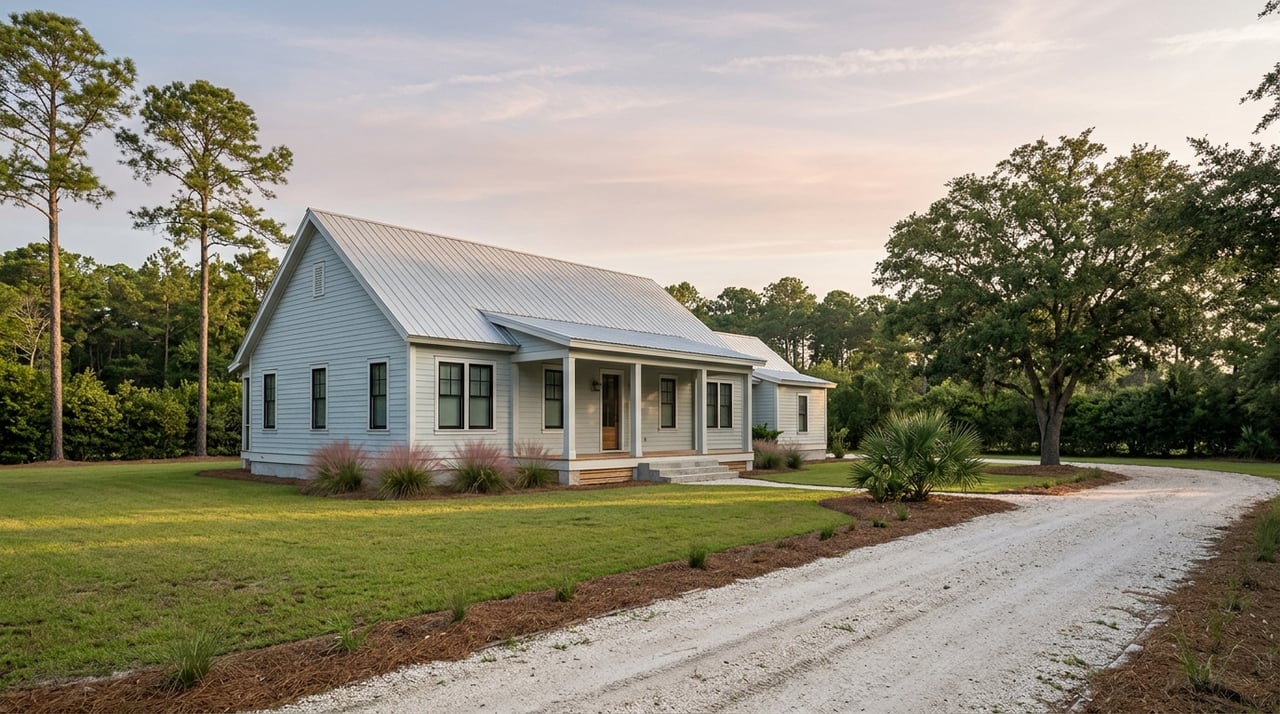
Buying a Home in Rocky Point for Privacy, Space, and Value
May 21, 2026
May 21, 2026
If you want more elbow room without giving up access to Wilmington or the coast, Rocky Point deserves a closer look. For many buyers, the appeal is simple: more land, more privacy, and a development pattern that still feels less dense than many nearby coastal areas. If you are weighing lifestyle, practicality, and long-term value, this guide will help you understand what makes Rocky Point stand out and what to verify before you buy. Let’s dive in.
Rocky Point is an unincorporated community in Pender County at the intersection of NC 210 and US 117. Pender County spans about 845 square miles of land area, making it the fifth largest county in North Carolina by total land area. That larger county footprint helps explain why buyers can still find a more open, rural feel here.
Pender County’s current 2050 land-use plan says the Rural Agricultural future land-use category covers nearly 60% of county land and is intended for low-density development. County planning analysis also placed Rocky Point in the Long Creek Planning Area, where about 77% of land was rural agriculture. In practical terms, that supports the kind of large-lot and lower-density setting many buyers want when they start looking beyond busier coastal hubs.
If your goal is space for outdoor living, extra parking, or simply more breathing room between homes, Rocky Point can check a lot of boxes. You are not just buying a house here. You are often buying a different pace and pattern of land use.
When buyers talk about value in Rocky Point, they often mean more than the purchase price alone. They are looking at what they get for the money, such as lot size, privacy, flexibility, and access to nearby destinations. That is where Rocky Point can become especially attractive.
Pender County’s population estimate reached 70,077 in July 2024, up 16.4% from the 2020 census base. Even with that growth, the area’s rural character remains part of the appeal. At the same time, growth makes details like utility feasibility, road access, and lot usability more important because those factors can matter for future resale.
A property with usable acreage and clear documentation can offer stronger long-term practicality than a parcel that looks good at first glance but has unresolved site issues. In Rocky Point, smart value often comes from buying with a clear understanding of how the land actually works. That is especially true if you want flexibility for future improvements.
One of Rocky Point’s biggest strengths is its position. US 117 is the key north-south route through the community and connects Pender County with New Hanover County to the south and Duplin County to the north. That gives you a workable inland option while staying connected to major destinations.
For beach access, NC 210 and NC 50 are important mainland routes around the Surf City Bridge area. NCDOT has recently addressed congestion at the NC 210 and NC 50 roundabout and bridge approach with a temporary traffic signal and proposed intersection improvements. That ongoing attention shows how important those access corridors are for coastal travel.
For you as a buyer, the key is balancing privacy with convenience. Rocky Point can give you more inland-style space while still keeping Wilmington and beach towns within reach. The tradeoff is that beach-season traffic can affect commute times and weekend travel, so it is worth testing your likely routes at the times you would actually use them.
Rocky Point does not follow one single housing pattern. County planning materials describe the broader Long Creek area as having a mix of commercial, office, industrial, and residential uses along US 117, with small subdivisions and residential development along primary roadway corridors. The current county plan also supports low-density residential patterns and large-lot or conservation-style subdivisions in rural-agricultural areas.
That means you should expect variety. Some properties sit along corridor locations, some are in smaller neighborhoods, and others include larger tracts with a more open setting. This mix can be a plus because it gives you more options depending on how much land, privacy, and convenience you want.
If you are relocating from out of town, this is one place where local guidance matters. Two homes with similar price points can offer very different experiences based on road frontage, lot shape, access, and utility setup. Looking beyond listing photos is essential in Rocky Point.
In a lower-density area, due diligence is not just a formality. It is one of the most important parts of the buying process. Pender County planning staff say zoning permits are always required, and zoning districts can be checked through the county GIS.
The county also says setbacks may change if a parcel is in a flood zone or within an Area of Environmental Concern buffer. In the Rural Agricultural and Residential Performance districts, structures have a maximum height of 35 feet. The county does not regulate fences, but other zoning and site conditions can still shape what is practical on a property.
This matters because many buyers are drawn to Rocky Point for flexibility. You may want room for a detached garage, workshop, shed, or personal storage building. In Pender County, zoning permits are required for homes, sheds, signs, businesses, shops, personal storage, and offices, so those future plans should be part of your due diligence from day one.
Utility questions can have a big impact on both daily use and long-term value. Pender County’s residential-structure checklist says buyers should contact Environmental Health to confirm septic tank or repair-area information or request a soil suitability test. The county’s On-Site Wastewater Program evaluates soils for septic suitability and oversees septic systems and drinking-water wells.
You should also confirm how the property will be serviced if it is not on private well and septic. Pender County Utilities manages the Rocky Point and Topsail water and sewer district, but service availability can differ from parcel to parcel. It is important to verify water and sewer service for the specific property you are considering rather than assuming it is available across the board.
The county’s land-use guidance helps explain why this can vary. Expansion of centralized water and sewer systems in Rural Agricultural areas is generally discouraged unless needed to protect public health. So if utilities matter to your plans, parcel-level verification is a must.
A property can look spacious on paper and still present practical challenges. Pender County’s residential-structure checklist asks for driveway location, easements, utility locations, and environmental features on the site plan. Those details can affect how usable a lot really is.
As you compare properties, pay close attention to:
These details can influence both your immediate plans and future resale. In Rocky Point, some of the strongest long-term properties are the ones with straightforward access, clear site layout, and solid documentation.
Because parts of Pender County include water features, marsh areas, creeks, and other environmentally sensitive land, some properties may involve extra review. County planning staff note that setbacks may change if a parcel is in a flood zone or within an Area of Environmental Concern buffer. That can directly affect where and how improvements are placed.
If a property is near wetlands, creeks, or other coastal features, CAMA permitting may also come into play. Pender County says CAMA permits are required in Areas of Environmental Concern, which are generally near water or marsh or wetlands, and the North Carolina Department of Environmental Quality processes those permits.
That does not automatically make a property a poor choice. It simply means you want clarity before you commit. Understanding those rules early can help you avoid surprises later.
Rocky Point’s appeal is not just about land. The community also has local amenities that support everyday living. Pender County Schools lists Rocky Point Elementary School, Cape Fear Middle School, and Heide Trask Senior High School in Rocky Point.
For outdoor recreation, Pender County lists Millers Pond Park as a 31-acre park with a trail, playground, picnic shelter, fishing deck, and kayak launch. That gives residents access to simple, useful recreation close to home. For buyers who want a rural feel without feeling disconnected, that local infrastructure adds to Rocky Point’s appeal.
Before you buy in Rocky Point, make sure you confirm the basics that matter most for space, privacy, and long-term value:
This kind of preparation can make your purchase decision much more confident. It can also help you spot the difference between a property that simply seems large and one that is truly functional.
If you are looking for more space in coastal North Carolina, Rocky Point can be a compelling option. The mix of low-density land patterns, access to Wilmington and the coast, and a wider range of lot types gives you room to match your home search to your lifestyle. The key is buying with your eyes open and verifying the details that shape everyday use and future value.
If you want help comparing Rocky Point properties, understanding parcel-level differences, or narrowing your search to homes and land that fit your goals, Stephanie Bolleyer can help you make a confident move.
Stay up to date on the latest real estate trends.
Work with her for trusted, transparent real estate service in Coastal, NC. She brings expertise, dedication, and a client-first approach, guiding you smoothly from first showing to closing with clear communication and exceptional care every step of the way.