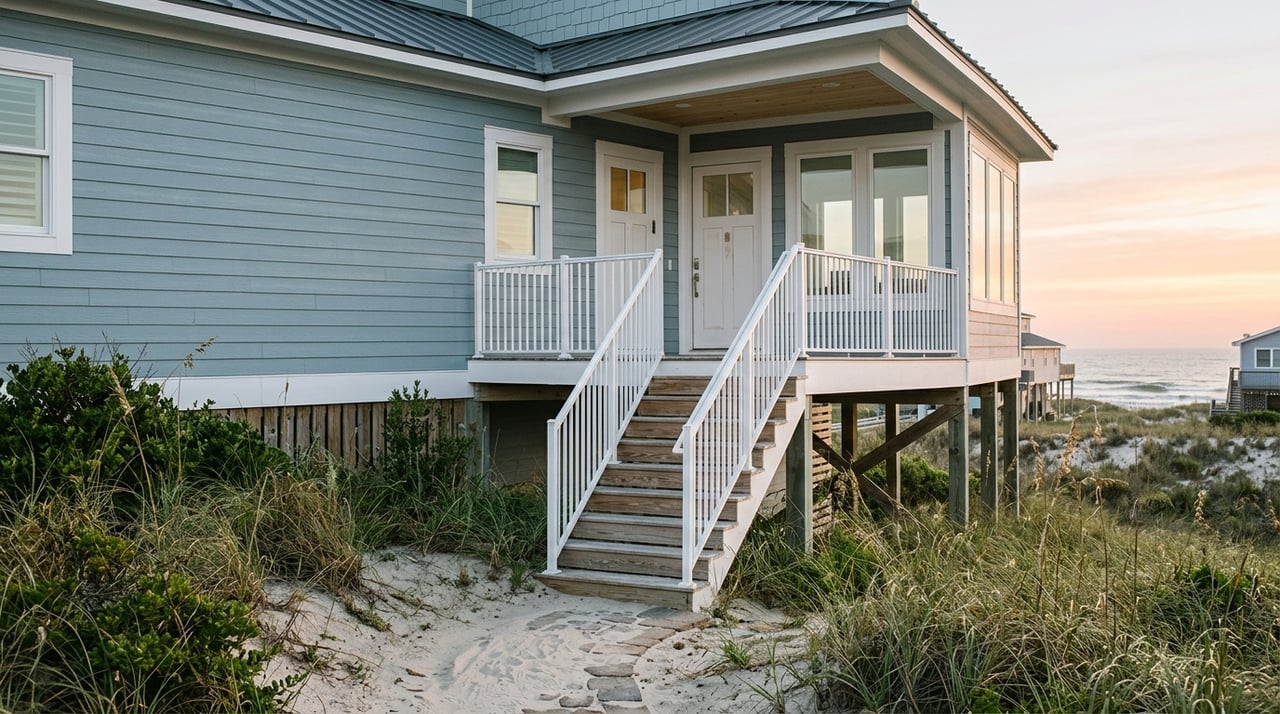
Buying an Oceanfront Home in Topsail Beach: Key Factors
July 9, 2026
July 9, 2026
Wondering if an oceanfront home in Topsail Beach is the dream escape you have been picturing? It can be, but buying on the water comes with a very different set of questions than buying inland. If you are considering a primary home, second home, or beach investment here, understanding flood risk, insurance, permits, and ongoing upkeep can help you make a confident choice. Let’s dive in.
Topsail Beach offers a different feel than many larger coastal markets. The town is on the southern end of Topsail Island, has roughly 500 year-round residents, and grows to about 7,000 people in season. It also does not allow high-rise development, which helps keep the oceanfront setting lower-density and more low-key.
For you as a buyer, that usually means a quieter, more seasonal ownership experience. It can also mean your day-to-day routine changes noticeably between winter and summer, especially when it comes to traffic, parking, and beach activity.
In Topsail Beach, oceanfront housing tends to reflect barrier-island conditions. While the town does not publish a formal inventory of architectural styles, local rules and coastal building guidance point toward low-rise, elevated homes instead of tower-style properties.
That matters because elevated construction is common in coastal high-hazard areas. Homes near the ocean are often designed around storm exposure, wave action, and flood requirements, so the structure itself should be part of your evaluation from the start.
One of the biggest things to know before buying an oceanfront home in Topsail Beach is that you are buying on a barrier island. North Carolina coastal officials note that oceanfront property faces risk from hurricanes, nor'easters, and the daily effects of wind, waves, and tides.
Pender County adopted new flood maps in January 2025, and any building in the floodplain requires a Flood Development Permit. The county also notes that some coastal properties may fall within Areas of Environmental Concern, including land near the ocean beach, inlets, marshes, or coastal wetlands.
Before you make an offer, it is smart to confirm whether the property is in a flood zone through the NC Flood Risk Information System or Pender County GIS. You should also ask whether an elevation certificate is on file, since that can affect both risk evaluation and insurance conversations.
Flood rules do not only matter for new construction. In Pender County, if repair or improvement costs reach 50 percent or more of a home's market value, the structure may have to be brought into compliance with current floodplain requirements, including elevation rules.
That is important if you are looking at an older oceanfront property with plans to renovate. A home that seems like a cosmetic update on day one can turn into a larger compliance project once work begins.
Oceanfront ownership in Topsail Beach also means paying attention to the land between the house and the water. North Carolina DEQ says oceanfront setbacks are measured from the first line of stable natural vegetation, which is a critical detail for coastal lots.
If a property is close to the dune line or near an inlet, permit questions can become more important. Pender County states that CAMA permits must be obtained before flood-development and building permits for construction authorized by the CAMA permit.
For you, that means due diligence should include more than the home itself. You also want to understand what can be repaired, improved, or added on the site under current local and coastal rules.
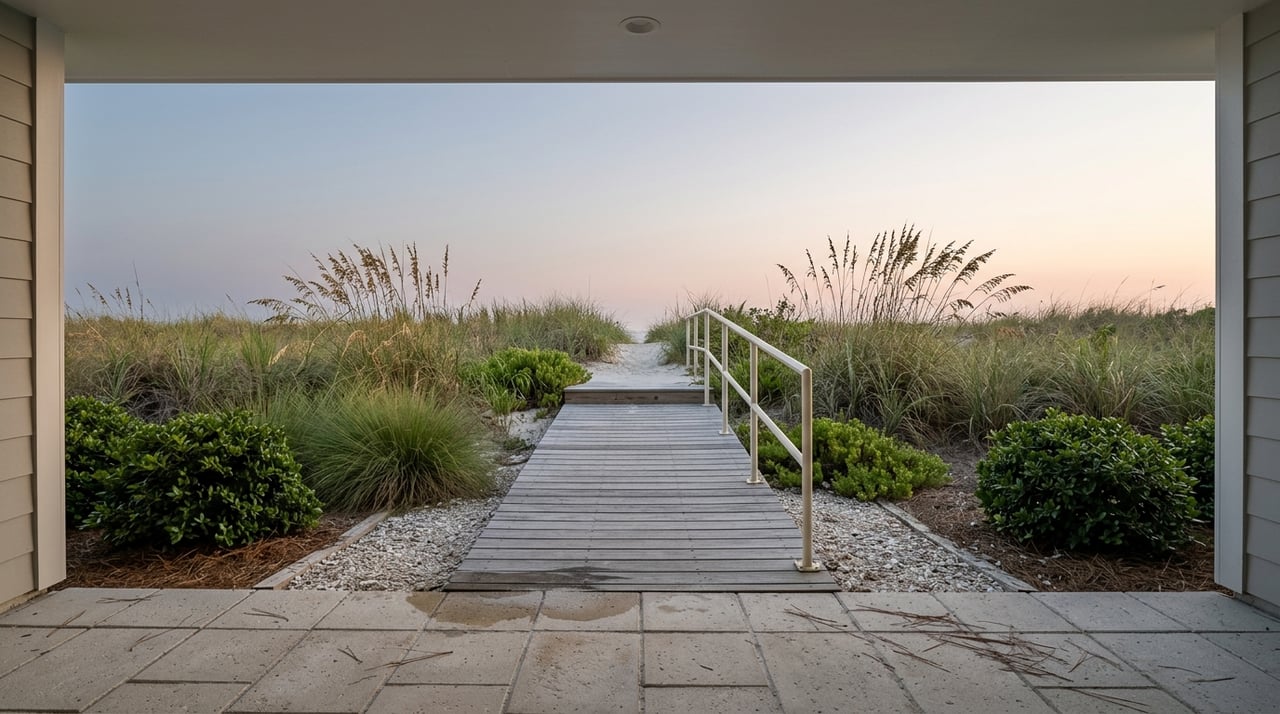
If you picture a private crossover straight to the sand, ask specific questions. Topsail Beach says oceanfront owners may cross the dune to access the beach, but crossovers cannot be extended over newly constructed dune and berm areas until stable natural vegetation is established, which can take up to two years.
The town also tightly limits small posts and rope in these areas, and sand fencing is restricted on new dune areas. If beach access design or landscaping is part of your vision, this is worth clarifying before closing.
Beach nourishment is part of the long-term coastal picture in Topsail Beach. The town says nourishment widens the beach, replaces sand lost to erosion, and helps maintain the natural barrier that protects coastal homes and buildings.
This is a positive feature for many owners, but it also means beach conditions and dune areas can change over time. Paid parking revenue helps fund regular beach maintenance and nourishment, so town policies around beach access and parking are directly tied to coastal upkeep.
The town also identifies beach vitex as an invasive plant that is unlawful to plant or maintain. If you are thinking about dune landscaping, it is best to understand what is allowed and what supports stabilization.
Insurance is one of the most important early conversations for oceanfront buyers. The North Carolina Department of Insurance says homeowners insurance does not cover flood damage, and flood insurance may have a 30-day waiting period.
In flood-prone areas, lenders may require flood insurance. That is why a flood quote should be part of your buying process early, not something you leave until the end of inspections.
Along the coast, windstorm and hail coverage may not always be included in the main policy. The North Carolina Department of Insurance says this coverage may be excluded from a primary policy in some areas and written separately through the North Carolina Insurance Underwriting Association or Coastal Property Insurance Pool.
You should also review deductibles carefully. Named-storm deductibles can apply differently from standard deductibles, so the declarations page deserves close attention before you move forward.
Here are a few smart questions to bring to your insurance professional:
Some coastal homes may qualify for mitigation credits. The North Carolina Department of Insurance says qualifying coastal homes can receive credits, and FORTIFIED construction or reroofing may help homeowners in coastal territories qualify for discounts.
If you are comparing two similar homes, construction details can make a real difference. Roof design, attachment details, and other resilience features may affect both insurability and long-term ownership costs.
It is easy to focus on the view and forget the logistics. Topsail Beach has 22 public beach accesses, and the town charges paid parking at oceanfront accesses from March 1 through October 31.
Public parking is limited in summer, and resident permits are tied to a water utility bill account. At the South End lot, overnight parking is not allowed.
If you plan to use the home seasonally, host guests, or explore rental use, summer parking rules can affect convenience and turnover. This is one of those local details that matters more once you actually own the property.
Oceanfront ownership also comes with town service routines. Topsail Beach bills monthly for water and trash. Trash is collected on Mondays in the off-season and on Mondays and Thursdays in the summer, while recycling is picked up on Mondays.
The town also says short-term rental properties must have two trash carts. Construction debris like pilings, decking, and walkways is not handled through bulk item pickup, which is useful to know if you are planning repairs or upgrades.
For second-home owners, the town notes that many owners live elsewhere and asks them to keep contact information current so staff can reach them about freezes or other issues. That is a practical reminder that remote ownership needs reliable local oversight and communication.
Oceanfront homes need more regular attention than inland homes. NC State Extension recommends budgeting about 1 to 3 percent of market value annually for maintenance and repairs, along with routine roof and gutter cleaning, exterior maintenance, and regular HVAC service.
Near the beach, salt exposure is a major factor. NC Sea Grant notes that salt aerosols are strongest near the beach and can damage vegetation and landscapes, while IBHS warns that saltwater and coastal exposure can accelerate corrosion in metal components.
That means you should budget for more than cosmetic upkeep. Paint wear, metal corrosion, roof aging, HVAC strain, and exterior materials all deserve a realistic maintenance plan.
Landscaping on the coast is not just about appearance. NC State Extension emphasizes that dune vegetation is essential for stabilization, and salt-tolerant native plants such as sea oats play an important role in coastal systems.
If the property includes dune areas or beachside landscaping, ask what has been planted, what can be maintained, and whether any changes may require approval. Healthy dune vegetation is part of protecting the shoreline environment around the home.
If you are planning a showing trip, try to get answers to these questions before you arrive:
These answers can help you compare homes more clearly. They can also keep you from falling in love with a view before you understand the full cost and responsibility that comes with it.
Buying an oceanfront home in Topsail Beach can be incredibly rewarding if you go in prepared. You get a smaller-town, lower-rise coastal setting, but you also take on barrier-island realities like flood risk, permit review, insurance complexity, seasonal parking, and heavier maintenance.
When you understand those factors upfront, you can shop smarter and avoid surprises later. The right oceanfront purchase is not just about the house. It is about how well the property fits your goals, budget, and comfort with coastal ownership.
If you want local guidance as you compare oceanfront homes in Topsail Beach, Stephanie Bolleyer can help you navigate the details and move forward with confidence.
Stay up to date on the latest real estate trends.
Work with her for trusted, transparent real estate service in Coastal, NC. She brings expertise, dedication, and a client-first approach, guiding you smoothly from first showing to closing with clear communication and exceptional care every step of the way.