Rocky Point NC Things to Do Beyond the U-Pick Sign
August 20, 2026
August 20, 2026
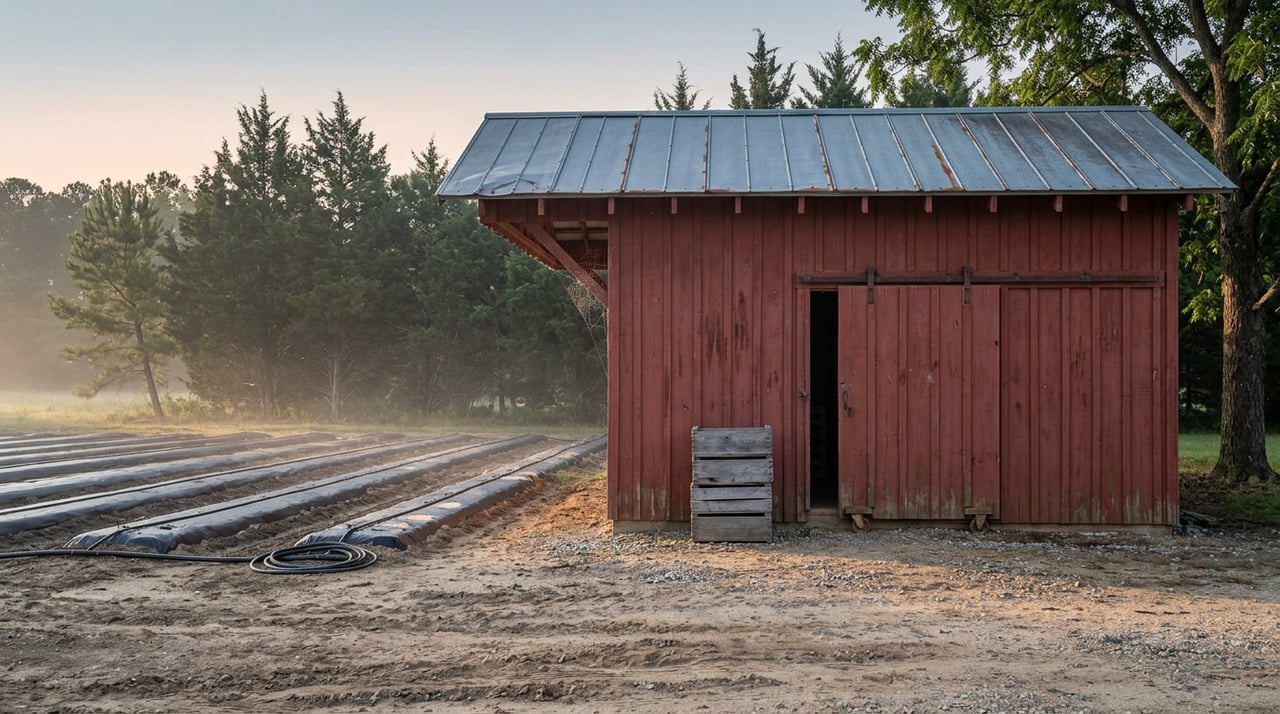
Drive north on NC Highway 133 through Rocky Point in late spring and you will pass a sign for Lewis Nursery and Farms, tunnels of plastic stretched over rows that run back farther than you can see from the road. It looks like the kind of place where you pull over, grab a bucket, and fill it with strawberries still warm from the sun. There is nowhere to pull over. No stand, no gate, no hand-lettered sign pointing you toward a parking lot. The farm is right there, and it is not for you, at least not in the way you are picturing it.
That contradiction is worth sitting with, because it says more about how Rocky Point actually functions than a list of restaurants ever could. This is a town built around production, not retail, and the gap between the two shapes everything from where you buy your berries to why the businesses that survive here look the way they do.
Lewis Nursery and Farms has been headquartered on Highway 133 since 1953, when Everette Lewis bought his uncle's farm next to his parents' land and started growing strawberries. His son Cal Lewis came home in 1982 after studying horticulture at NC State and took the operation from a single crop into a real production business. Today the Rocky Point acreage carries roughly 140 acres of standard spring strawberries, another 35 acres of tunnel-grown winter strawberries, 400 acres of blueberries, and 55 acres of tunnel blackberries, with early trials underway on long-cane raspberries.
None of that is set up for a Saturday morning with a bucket. The signature retail location, the one with the "pick your own" rows, the bedding plants, and the ice cream made from the farm's own fruit, sits eighteen miles away on Gordon Road in Wilmington, open Monday through Saturday from 9 a.m. to 6 p.m. and Sunday from 1 to 5 p.m. The farm also supplies jars of its jams and honey to Pine Valley Market, another Wilmington storefront. Strawberries typically come in first, around April, with blueberries following in May and blackberries closing out the run in June, but you will taste that timeline in Wilmington kitchens and farmers markets long before you see it advertised in Rocky Point itself.
If you have lived here a while, you already know this. If you just moved in, it is the kind of thing that takes a season or two to figure out on your own, usually after driving past that sign more than once expecting a stand that was never going to be there.
Rocky Point does have its own working farm stand experience, just not the one on the highway sign. Old River Farms runs a seasonal sunflower field that draws people out for a walk through the rows and a few photos, along with a farm stand for produce. It is a smaller, quieter operation than Lewis, and it is the one that actually functions the way outsiders assume Rocky Point's agriculture works: show up, walk the field, buy something on your way out.
The distinction matters because it tells you how to plan a weekend here without wasting a trip. If you want the wholesale-scale berry operation with the name recognition, that means a drive into Wilmington. If you want something you can walk into without leaving town, Old River Farms is the one built for foot traffic. Two farms, two different jobs, and knowing which does which saves you a confused loop around Highway 133 wondering where everyone else is picking their strawberries.
Rocky Point does not have a historic downtown with a walkable block of storefronts. What it has instead is a working strip along Highway 117 and Highway 210 that handles the errands a Main Street would otherwise carry. Rocky Point Pavilion Pharmacy fills prescriptions a few doors down from San Juan Mixtepec Restaurante y Tienda, which doubles as both a sit-down spot and a small grocery. A few miles over on Highway 210, Blackburn Brothers Seafood sells directly off a wholesale operation, which means the fish case reflects what actually came off a boat that week rather than a curated seafood counter designed for browsing.
None of these were built to be destinations. They were built to serve people who already live here and need groceries, a prescription, or dinner on a weeknight, which is a different design goal than a retail corridor meant to pull in visitors. That is also why the corridor rarely shows up on any "best of" list for the region. It was never supposed to be photogenic. It was supposed to be useful, and it still is.
For anyone who wants water instead of asphalt on a Saturday, the NE Cape Fear River Ramp on Shaw Highway offers public boat access to the river that gives the town its name reference point, a straightforward put-in for fishing or a slow paddle rather than a scenic overlook, which fits the rest of the town's pattern: function first, appearance second.
The production-over-retail pattern is not new. It goes back to how Rocky Point was built in the first place. According to the county's own tourism history, the area has been known since Revolutionary times for its fertile soil, with as much as 5,000 acres of marl subsoil within a five mile radius of town, fertile enough that early farmers rarely needed added fertilizer. When Wilmington deepened the Cape Fear River channel, the rock used to fill the new inlet came out of the Rocky Point section of the Northeast Cape Fear River, a project completed in 1875 that gave the area its early nickname, "The Rocks." Five years later, the French brothers opened Excelsior Plantation on that same land, turning the rock quarries and marl beds into a fertilizer operation recommended by state chemists at the time.
That history lines up with what still holds true. Since the 1870s, Rocky Point has supplied raw material, whether fertilizer, produce, or seafood, to markets that finish the job somewhere else. The Lewis Farms sign on Highway 133 is not an anomaly. It is the same pattern the town has followed, just wearing a different crop.
None of this changes what your week looks like day to day. You will still get your prescriptions at the pharmacy on 117, still grab seafood off Highway 210 when the case looks good, still figure out that the sunflower photos everyone posts in the summer come from Old River Farms and not the highway you assumed. What changes is how you read the town once you know the pattern. Rocky Point was never going to have a walkable downtown or a u-pick sign on its biggest farm, because it was never built to sell you the experience. It was built to grow the thing and let somewhere else handle the transaction.
That is a strange kind of consistency for a place, but it is consistent, and once you see it you stop expecting the sign on 133 to be anything other than what it is.
If you are weighing a move within Rocky Point, curious what a property here is actually worth in today's market, or just want a second opinion from someone who tracks this corridor closely, Stephanie Bolleyer offers a free home valuation with no pressure attached. It takes a few minutes and gives you a real number to work from, whether you are planning something this year or just keeping tabs on the neighborhood you already call home.
Stay up to date on the latest real estate trends.
Work with her for trusted, transparent real estate service in Coastal, NC. She brings expertise, dedication, and a client-first approach, guiding you smoothly from first showing to closing with clear communication and exceptional care every step of the way.